
You’ve seen the videos.
Dry ice is applied to a car dent. There’s smoke. A pop sound. The dent “magically” disappears.
TikTok loves a quick fix.
The clips are short and dramatic and they’re convincing at a glance. Few if any ever show what happens to that paint weeks later.
But here’s the truth. Thermal shock is not a pro way to fix your joint. And it can cause more harm than benefit.
Let’s analyse what’s actually going on – and why professionals don’t use viral hacks.
The Science Behind the “Pop”
Dry ice is extremely cold. The metal makes the surface retract quickly when it comes into contact with warm metal.
The theory? The rapid shift in temperature bounces the dented metal back into place.
And it works, sometimes.
But modern cars are more than metal.
They are layered systems:
- Primer
- Base colour coat
- Clear coat
A sudden change in temperature places stress on that interface.
And that stress can lead to cracking.
Why Thermal Shock is Risky?
Car paint is meant to bend a bit with the temps.
But that is managed change − not freezing in extreme, in seconds.
When you shock them with dry ice, it’s just highly focused thermal shock. The metal contracts. The paint layer reacts differently.
This can lead to:
- Micro-cracks in the clear coat
- Loss of gloss
- Premature paint brittleness
- Hidden paint failure months later
The dent might shift. But there was another possible culprit: The paint system could be compromised.
And when the paint’s integrity is already breached? Repairs to such damage are more difficult and expensive.
Why It’s So Ineffective on Today’s Cars?
Modern cars are built with high-strength steel and aluminium panels.
These materials don’t behave the way car panels of yesteryear did. They are designed to be both safe and strong.
If the dent is shallow and soft in nature, it may react a very small degree of temperature manipulation. But sharp hail dents?
Highly unlikely.
This is why true hail damage repair pros don’t use dry ice gimmicks. True repairs should involve controlled pressure from behind the panel, not abrupt temperature changes.
What Professionals Do Instead?
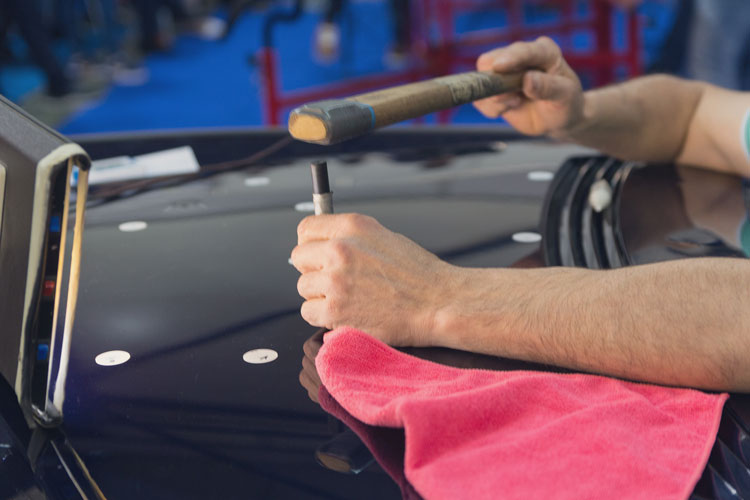
Most hail dents are removed by the pros through paintless dent removal.
This method involves:
- Specialised rods
- Careful Panel access to back side
- Gradual, precise pressure
As she moves the metal slowly but surely back to position.
No thermal shock.
No paint stress.
No surface damage.
When done properly, paintless dent removal completely renews the panel and does not harm the factory or custom finish.
That’s important. Factory paint is tougher and more uniform than any repaint job.
When a Hack Becomes Something Worse?
After a costly hailstorm, some drivers use dry ice to try and save money. That’s when, you know if the paint cracks, everything is off.
Now, instead of a straightforward hail damage repair, it may require:
- Sanding
- Repainting
- Colour matching
That can add cost and lower resale value.
Experts like Straight Panels know how different materials react when stress is applied. The objective is restoration − not cinematic take shortcuts.
TikTok vs Real Repair
Fan hacks are fun to watch.
But cars are long-term investments.
Today’s paint systems are designed to be long-lasting. If they are exposed to extreme cold, they can lose some flexibility long term.
Just because a dent seems to “pop” does not mean the structure is entirely fixed. And unseen damage is usually worse than seen damage.
If your car was dented by a hailstorm, make sure to see a professional for the right kind of hail dent repair. Enquire about paintless dent removal and whether your car could benefit from it.
Protecting your paint is another.
And the actual science says that thermal shock is a crapshoot – not a cure.