
Stop-and-go traffic is hard on a vehicle. It may not feel as rough as highway driving, but your brakes are working almost the whole time. You press the brake. Move a few feet. Press again. Wait. Roll forward. Brake again. After a while, that constant friction creates heat.
A little heat is normal. Brakes are designed to handle heat because friction is how they slow the vehicle down. But when the brakes get too hot and cannot cool down fast enough, they can overheat. This can lead to brake fade, burning smells, noisy braking, and in serious cases, reduced stopping power.
Understanding why brakes overheat in stop-and-go traffic can help you drive safer and avoid expensive repairs.
How Brakes Create Heat
When you press the brake pedal, the brake pads press against the rotors. This friction slows the wheels. That friction also creates heat.
In normal driving, the brakes have time to cool between stops. On an open road, you brake, then drive for a while before braking again. Air moves around the wheels and helps release heat.
In stop-and-go traffic, there is not much cooling time. The brakes are used again and again at low speeds. Airflow is limited. Heat builds up faster than it can escape.
That is when overheating can start.
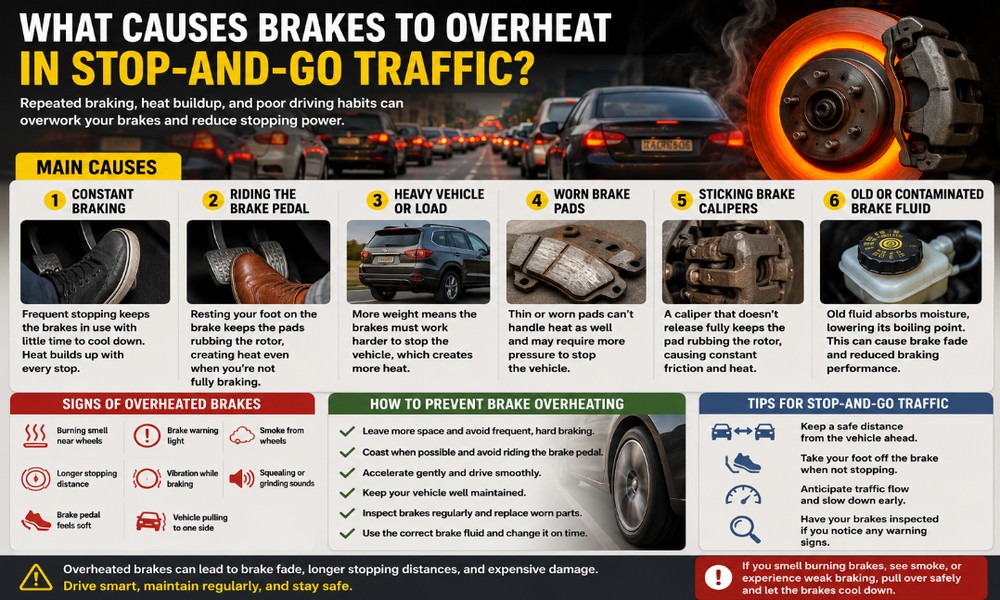
Constant Braking Is the Main Cause
The most common cause of overheated brakes in traffic is repeated braking. Every time you press the pedal, you add more heat to the system.
This is worse if traffic is moving in short bursts. You accelerate, then stop. Accelerate, then stop again. The brakes have to work over and over.
Even if each stop feels light, the heat adds up. After 20 or 30 minutes of heavy traffic, the brake pads and rotors can become much hotter than usual.
Riding the Brake Pedal
Some drivers rest their foot on the brake pedal while moving slowly. This is called riding the brakes.
It may feel harmless, but it keeps the brake pads lightly touching the rotors. That creates constant friction, even when you are not fully stopping. Over time, this can overheat the brakes and wear the pads faster.
In traffic, try to avoid keeping your foot on the brake unless you need to slow down or stop. Leave a little space ahead so you can coast when traffic moves slowly.
Heavy Vehicles Put More Stress on Brakes
A heavier vehicle needs more braking force to stop. SUVs, trucks, vans, and vehicles carrying extra cargo can create more brake heat in traffic.
Passengers, tools, luggage, or towing weight can make the brakes work harder. The more weight the brakes must control, the more heat they produce.
This does not mean heavy vehicles are unsafe. It only means the brake system works harder and needs proper maintenance.
Worn Brake Pads
Worn brake pads can also lead to overheating. Brake pads are designed with friction material that helps manage heat. When the pads get too thin, they may not absorb and handle heat as well.
Thin pads can also make braking less smooth. The system may need more pressure to stop the vehicle, which adds more heat.
If you hear squealing, grinding, or scraping sounds, the brake pads may be worn and should be inspected soon.
Sticking Brake Calipers
A sticking brake caliper is another serious cause of brake overheating.
The caliper holds the brake pads and presses them against the rotor. When you release the brake pedal, the caliper should let go. If it sticks, the pad may keep rubbing the rotor while you drive.
This creates constant friction and heat. One wheel may become much hotter than the others. You may notice a burning smell, pulling to one side, or smoke near a wheel.
A sticking caliper should not be ignored. It can damage pads, rotors, brake fluid, and other parts.
Old or Contaminated Brake Fluid
Brake fluid helps transfer force from the brake pedal to the braking system. Over time, brake fluid can absorb moisture. This lowers its boiling point.
When brakes get very hot, old fluid may boil more easily. If that happens, the brake pedal may feel soft or spongy. Braking response can become weaker.
This is one reason regular brake fluid service matters. Fresh brake fluid helps the system perform better under heat.
Poor Driving Habits in Traffic
How you drive in traffic makes a difference.
Hard braking, quick acceleration, and following too closely all increase brake heat. When you stay too close to the car ahead, you have to brake more often. When you leave more space, you can coast more and brake less.
A smoother driving style helps reduce heat. It also improves fuel economy and makes the ride less stressful.
Try to look ahead, move gently, and avoid rushing from one stop to the next.
Signs Your Brakes Are Overheating
Overheated brakes often give warning signs. Watch for:
- Burning smell near the wheels
- Brake pedal feels soft or spongy
- Longer stopping distance
- Smoke from a wheel area
- Squealing or grinding sounds
- Vehicle pulling to one side
- Vibration while braking
- Brake warning light
If you notice smoke, severe burning smell, or weak braking, pull over safely and let the brakes cool. Do not pour water on hot brakes. Sudden cooling can damage the rotors.
How to Prevent Brake Overheating in Traffic
You cannot always avoid traffic, but you can reduce brake stress.
Leave more space between your vehicle and the one ahead. Coast when possible. Avoid riding the brake pedal. Accelerate gently. Keep your brakes inspected. Replace worn pads before they become too thin. Make sure brake fluid is in good condition.
If you drive in heavy traffic every day, regular brake checks are even more important.
Final Thoughts
Brakes overheat in stop-and-go traffic because they are used repeatedly without enough time to cool. Constant braking, riding the pedal, worn pads, sticking calipers, heavy loads, and old brake fluid can all make the problem worse.
The best way to protect your brakes is to drive smoothly and maintain the system properly. Brakes are one of the most important safety parts of any vehicle. If they smell hot, feel weak, or make unusual sounds, it is better to have them checked early before a small issue turns into a dangerous one.
This post was written by a professional at Tires2Go Florida. Tires2Go Florida is a trusted automotive service center located in Pinellas Park, Florida, serving drivers across St. Petersburg, Tampa, Clearwater, and Largo. Our certified mechanic Tampa handle tire and wheel replacement, brakes in Pinellas Park, suspension repairs, oil changes, wheel alignments, tire balancing, and road force balancing. We also specialize in ADAS calibration, suspension modifications, lift kits, and lowering kits using quality parts and modern diagnostic equipment. From routine maintenance to advanced automotive services, Tires2Go Florida provides dependable solutions and tires for sale for vehicles throughout the Tampa Bay area.